Yuer Tang
"It started with a simple question: what is the model inside our minds?"
Hi! My name is Yuer Tang and I recently graduated from UCLA, and am an incoming master's student in Electrical Engineering at Stanford University. I am fortunate to be starting a project at the Stanford Vision and Learning Lab (SVL) with Jiajun Wu, Jieneng Chen, and Yining Hong.
During my undergrad, I was fortunate to be advised by Ying Nian Wu at the UCLA Statistics Department, Jiayuan Mao at MIT CSAIL, and Justin Baker at the UCLA Mathematics Department. Outside of this, I enjoy hiking 🥾, sailing ⛵, tennis 🎾, and writing ✍️.
Research Highlights
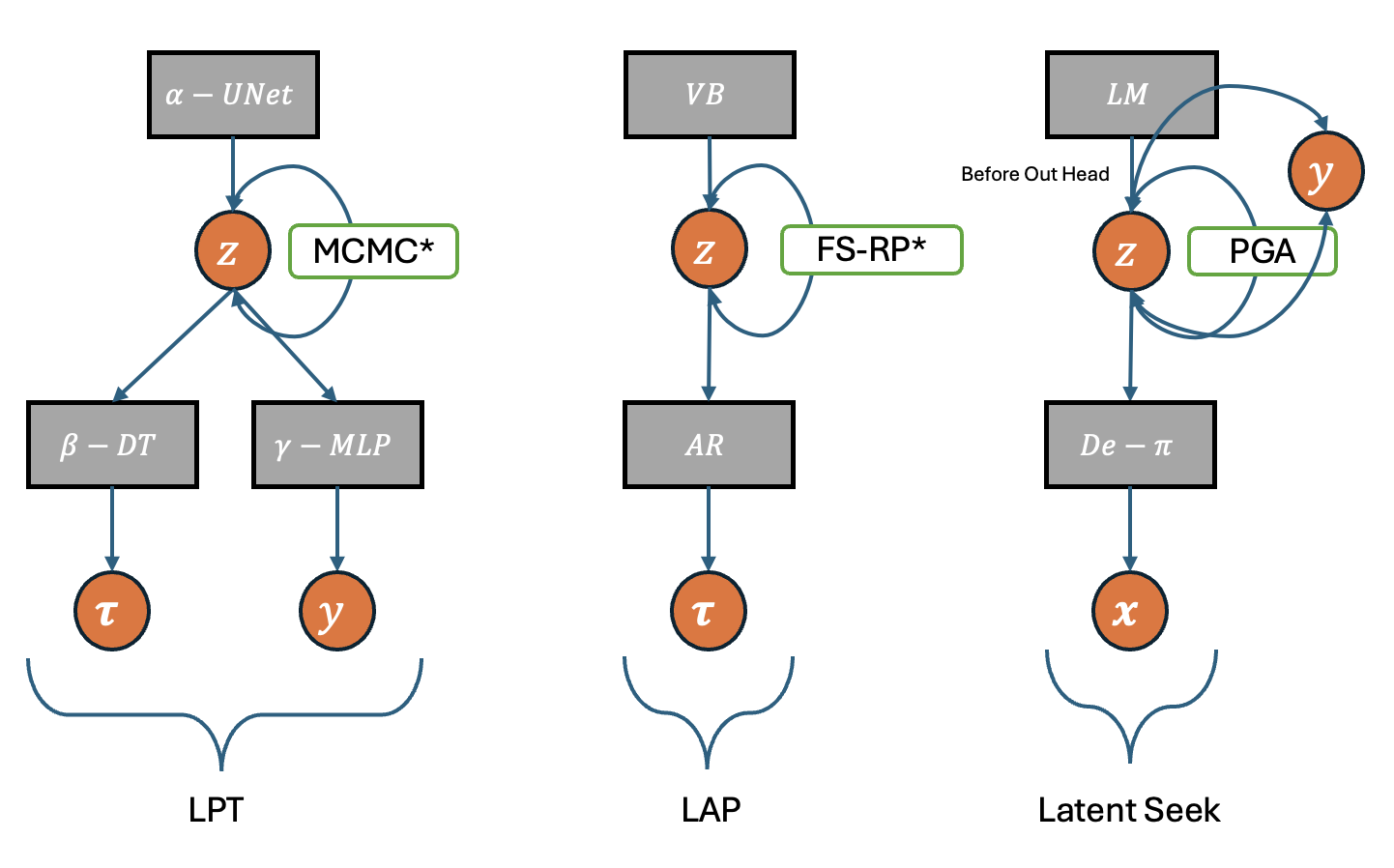
I believe that for a machine to perceive, reason, and act in the world, it needs an internal model, one built from multimodal experience, not language alone. Such a model should live in a latent space where different modalities meet: vision, touch, proprioception, language. The key question is abstraction. A robot pouring water and a robot planning a meal need the same world, represented at very different levels of detail. I study how to structure these latent spaces so that the right abstraction emerges for the right task. I draw on ideas from cognitive science, neuroscience, and mathematics. In my current work, I explore this through structured latent representations for robotic manipulation, meta-adaptive planning, and mathematically grounded neural architectures.
Paper accepted to the AAAI 2026 NeuroAI Workshop. See you in Singapore!
Presented "When Linear Models Aren't Enough" at the Joint Mathematics Meeting in Washington D.C.
Submitted work on coherent memory structures in neural fields to ICLR 2026.
Started working with Jiayuan Mao at MIT CSAIL. My first time working on robotics!
Disentangled Scale Control for Robotic Policies
MIT CSAIL · In Preparation